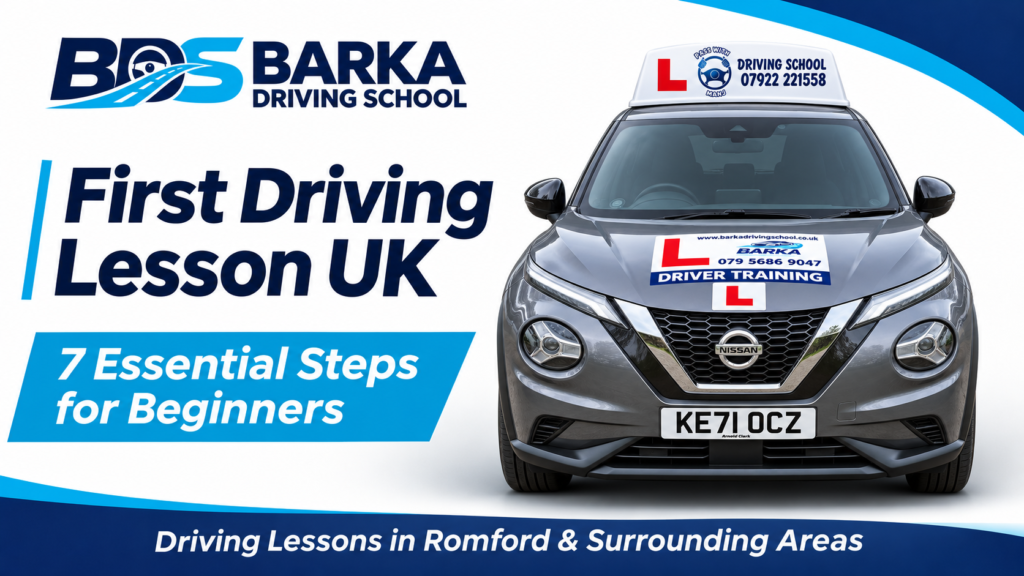
First Driving Lesson UK: 7 Essential Steps for New Learners
Your first driving lesson in the UK is an important step towards becoming an independent driver. Whether you’re 17 and learning for the first time or an adult who has decided to start later, it’s natural to have questions. What documents do you need? Should you learn manual or automatic? What happens during your first lesson? And how much should you budget? This beginner’s guide explains seven practical steps to starting driving lessons, with advice for learners in Romford, Hornchurch, Goodmayes and surrounding areas. 1. Apply for Your Provisional Driving Licence Before starting on-road driving lessons in Great Britain, you’ll normally need a valid provisional driving licence. You can usually apply from the age of 15 years and 9 months, although most learners cannot start driving a car on public roads until they are 17. Certain exceptions apply. You’ll also need to meet the eyesight requirements. Apply directly through the official GOV.UK provisional driving licence service. Avoid websites that charge unnecessary additional fees for applications you can complete through GOV.UK. What should you bring to your first lesson? Bring your provisional licence and any glasses or contact lenses you need for driving. Your instructor may need to check your licence and eyesight before you drive. 2. Choose Between Manual and Automatic Driving Lessons One of your first decisions is whether to learn in a manual or automatic car. Manual Driving Lessons Manual cars require you to operate the clutch and select gears. Learning in a manual car can take additional practice while you develop coordination between the clutch, accelerator and gear lever. However, passing your practical test in a manual car normally allows you to drive both manual and automatic vehicles. Automatic Driving Lessons Automatic cars do not require manual clutch operation or gear selection. Some learners find this helps them concentrate more on road positioning, observations and traffic decisions. If you pass your test in an automatic car, your licence is normally restricted to automatic vehicles. Which should you choose? Consider your confidence, the type of car you expect to drive and your long-term needs. At Barka Driving School, manual driving lessons cost £35 per hour and automatic lessons cost £40 per hour. Learn more about driving lessons in Romford. 3. Choose a Qualified Driving Instructor A driving instructor should help you develop safe driving skills, not simply prepare you to repeat familiar test routes. When choosing an instructor, consider their qualifications, communication style, reliability and approach to teaching. You should feel comfortable asking questions, explaining what you find difficult and discussing your progress. Approved driving instructors are registered with the Driver and Vehicle Standards Agency (DVSA). You can use the official driving instructor search to help find an instructor. Questions worth asking Choosing a patient instructor who adapts lessons to your needs can make the learning process more manageable. 4. Understand What Happens During Your First Driving Lesson Many beginners worry that they’ll be expected to drive immediately on a busy road. A well-planned first lesson should take your experience and confidence into account. Your instructor may begin by discussing your previous experience, checking your provisional licence and explaining the main controls. For a complete beginner, the lesson may include: You won’t necessarily cover everything during your first session. The aim is to establish a safe foundation rather than rush through a list of exercises. What if you’re nervous? Tell your instructor before the lesson. An experienced instructor can explain each activity, answer questions and introduce more demanding situations when appropriate. You should not feel pressured to drive beyond your current ability. 5. Start Learning the Highway Code and Driving Theory Your practical lessons and theory study should support each other. Understanding the Highway Code can help you recognise road signs, speed limits, priorities and the responsibilities of other road users. The car theory test includes multiple-choice questions and hazard perception. Start preparing early rather than waiting until you’ve completed several months of lessons. Useful official resources include: The Highway Code Car Theory Test Information A useful study routine Spend a short period each week reviewing road signs and traffic situations. During your driving lessons, ask your instructor to explain how the Highway Code applies to the decisions you’re making. For example, understanding pedestrian priorities is more valuable when you connect the rules with actual junctions and crossings. 6. Practise Regularly and Monitor Your Progress Learning to drive is about developing consistent skills. You’ll gradually move from basic vehicle control to more complex situations such as junctions, roundabouts, parking and independent driving. Regular lessons can help you retain what you’ve learned, although the best frequency depends on your circumstances, availability and budget. At Barka Driving School, our standard lessons are two hours long. How much do driving lessons cost? Our current standard prices are: Lesson Type Hourly Rate Two-Hour Session Manual Driving Lessons £35 £70 Automatic Driving Lessons £40 £80 Discuss lesson availability and pickup arrangements before booking. Keep track of your progress After each session, consider three questions: Your instructor can also help you evaluate your progress using the skills needed for safe, independent driving. 7. Prepare for Your Theory and Practical Driving Tests Once you have developed the required skills, you can work towards your driving tests. You must pass the theory test before booking your practical car driving test. Your practical test assesses safe driving, observations, judgement, vehicle control and independent driving. It is not a test of how well you can memorise a particular route. For learners around Romford, practical test centres may include Hornchurch, Goodmayes and other centres depending on availability. The best preparation involves practising different roads and traffic situations at a level appropriate to your ability. How do you know you’re ready? You should be able to drive safely without frequent prompts from your instructor. You should also be able to respond appropriately to hazards and make sound decisions on unfamiliar roads. A realistic mock driving test can help identify areas that still need improvement. The DVSA provides a useful
What to Expect from Driving Lessons in the UK: Beginner’s Guide
Wondering what to expect from driving lessons in the UK? Your first few sessions are only the beginning. Learning to drive is a process of building vehicle control, road awareness and independent judgement over time. You won’t be expected to manage every situation immediately, and there isn’t a single lesson plan that suits everyone. This guide explains what normally happens as your driving lessons progress, how your instructor can support you and what to look for when deciding whether you’re ready for more demanding roads and, eventually, your driving test. How do driving lessons work in the UK? Driving lessons with a professional instructor are tailored to your experience and current ability. A complete beginner might start on quieter roads, whereas someone returning after a break might begin with an assessment of their existing skills. During a lesson, your instructor may explain the goal, demonstrate or talk through a skill, allow you to practise and then give feedback. The amount of help you need should gradually reduce as you become more confident and capable. If you are about to take your very first lesson, read our first driving lesson guide for advice on the provisional licence, what to bring and how to prepare. Stage 1: Becoming familiar with the car At the beginning, the emphasis is on setting up the driving position and learning to control the car safely. This can include: Adjusting your seat, mirrors and head restraint Understanding steering, pedals and other essential controls Moving off, stopping and securing the car Checking the road and blind spots before moving Maintaining a suitable position on a quiet road If you’re learning in a manual car, you’ll also practise clutch control and gear changes. Automatic learners do not need to manage a clutch pedal, but they still need to develop the same observation and decision-making skills. Stage 2: Junctions, road positioning and everyday traffic As your control develops, lessons can include different junctions, meeting oncoming traffic and responding to parked vehicles. Your instructor will help you plan earlier, use your mirrors effectively and select a safe speed and position. For example, when approaching a give-way junction, you need to notice the signs and road markings, judge the visibility, look for other road users and decide whether there is a safe opportunity to emerge. Simply knowing where the brake pedal is will not make that decision for you. These lessons are about understanding what’s happening around you, not just memorising a sequence of actions. Stage 3: Roundabouts, busier roads and manoeuvres When you’re ready, your instructor may introduce more complex roundabouts, multi-lane roads and parking exercises. The order depends on your progress and the type of roads available. Parking practice might cover parallel parking, bay parking and safe reversing. A useful session should include all-round observations and responding to pedestrians or other vehicles, not just following fixed reference points. On busier roads, you’ll work on reading signs, planning lane choices and making safe decisions in changing traffic conditions. It is normal for some situations to need more practice than others. Stage 4: Developing independent driving skills As you become more capable, your instructor should gradually reduce prompts. You might follow signs or a sat nav, navigate unfamiliar junctions and decide how to respond to hazards without constant instructions. Independent driving does not mean taking risks alone. It means using what you have learned to recognise situations, plan ahead and make safe decisions. The Highway Code is a useful companion to practical lessons because it explains the rules and responsibilities behind those decisions. How much do driving lessons cost? At Barka Driving School, standard manual driving lessons are £35 per hour and automatic driving lessons are £40 per hour. Our usual session length is two hours, so a standard manual session costs £70 and an automatic session costs £80. There is no fixed number of hours that every learner must complete. Your lesson frequency and total cost will depend on your starting point, progress, opportunities for practice and availability. What should good instructor feedback look like? Effective feedback helps you understand both what went well and what you should improve. At the end of a lesson, useful questions include: Which skill is becoming more consistent? What happened when a particular situation became difficult? What could you notice or do earlier next time? What is a realistic goal for the next lesson? If you feel nervous or unsure, tell your instructor. A supportive approach should allow you to ask questions and revisit skills without being rushed. When will you be ready for the practical test? Being ready for your test is not the same as knowing the roads around a test centre. You should be able to drive safely and independently in different conditions and respond to unfamiliar situations appropriately. A mock driving test can help identify remaining weaknesses, but one successful mock assessment cannot guarantee a pass. The DVSA’s Ready to Pass guidance provides a useful explanation of the standard to aim for. Driving lessons around Romford, Hornchurch and nearby areas Barka Driving School welcomes beginners, nervous learners and people returning to driving. We offer manual and automatic tuition, with local pickup arranged at a suitable agreed meeting point where availability allows. Learners may enquire from Romford, Hornchurch, Goodmayes, Wanstead, Brentwood, Tilbury and surrounding areas. Find out more about driving lessons in Romford, or contact Barka Driving School with your postcode, preferred lesson type and availability. Frequently asked questions Will I drive on busy roads during my first few lessons? Not necessarily. Your instructor should choose a suitable starting point for your current skills, then introduce more demanding situations as your ability develops. Is a two-hour lesson better than a one-hour lesson? A longer session can provide more time for explanation, practice and feedback, but the right arrangement depends on your concentration, schedule and circumstances. Barka’s standard sessions last two hours. What happens if I struggle with a manoeuvre? Your instructor can break it into smaller parts, explain the observations and