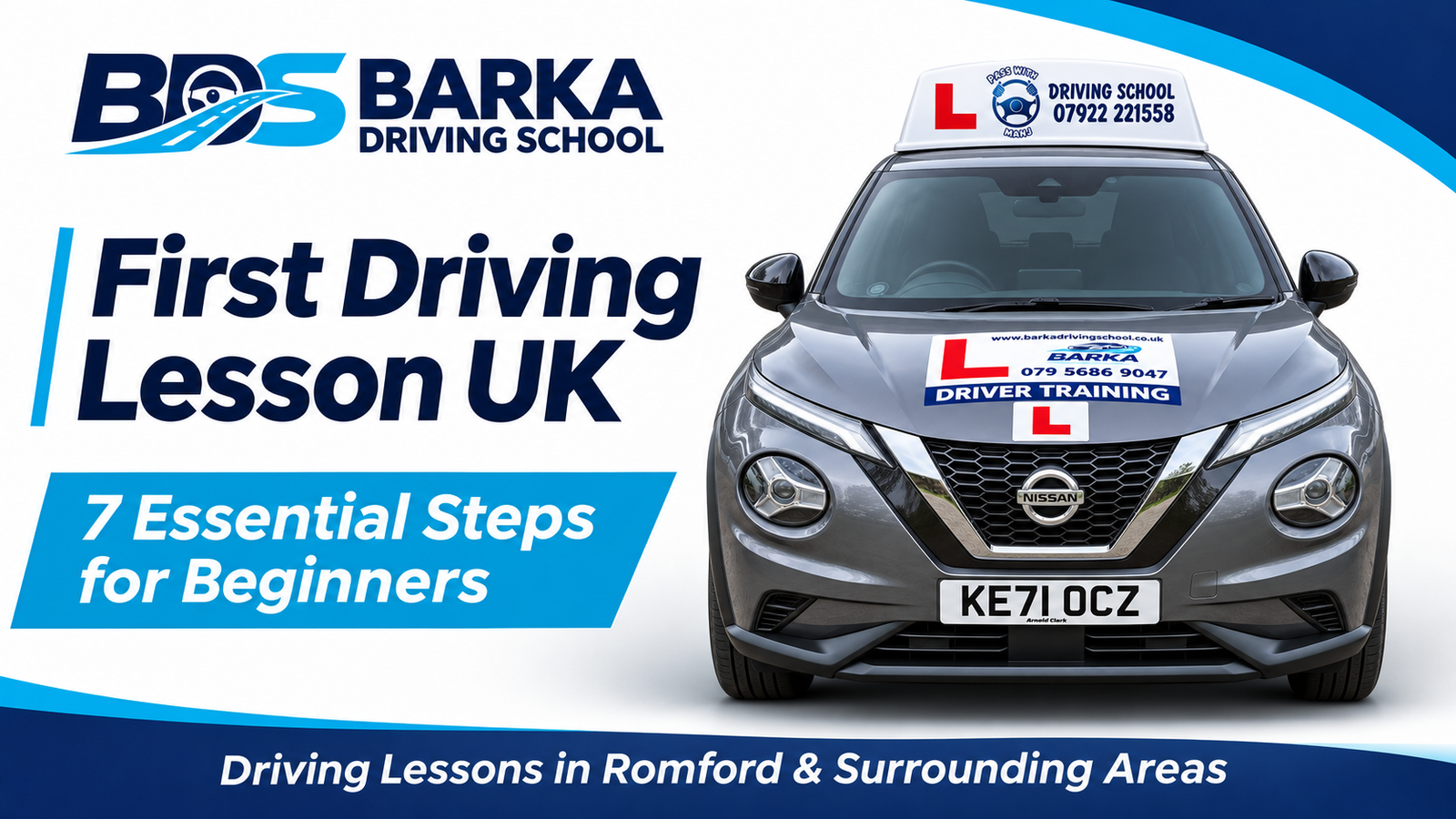
Your first driving lesson in the UK is an important step towards becoming an independent driver. Whether you’re 17 and learning for the first time or an adult who has decided to start later, it’s natural to have questions.
What documents do you need? Should you learn manual or automatic? What happens during your first lesson? And how much should you budget?
This beginner’s guide explains seven practical steps to starting driving lessons, with advice for learners in Romford, Hornchurch, Goodmayes and surrounding areas.
1. Apply for Your Provisional Driving Licence
Before starting on-road driving lessons in Great Britain, you’ll normally need a valid provisional driving licence.
You can usually apply from the age of 15 years and 9 months, although most learners cannot start driving a car on public roads until they are 17. Certain exceptions apply.
You’ll also need to meet the eyesight requirements.
Apply directly through the official GOV.UK provisional driving licence service.
Avoid websites that charge unnecessary additional fees for applications you can complete through GOV.UK.
What should you bring to your first lesson?
Bring your provisional licence and any glasses or contact lenses you need for driving.
Your instructor may need to check your licence and eyesight before you drive.
2. Choose Between Manual and Automatic Driving Lessons
One of your first decisions is whether to learn in a manual or automatic car.
Manual Driving Lessons
Manual cars require you to operate the clutch and select gears.
Learning in a manual car can take additional practice while you develop coordination between the clutch, accelerator and gear lever.
However, passing your practical test in a manual car normally allows you to drive both manual and automatic vehicles.
Automatic Driving Lessons
Automatic cars do not require manual clutch operation or gear selection.
Some learners find this helps them concentrate more on road positioning, observations and traffic decisions.
If you pass your test in an automatic car, your licence is normally restricted to automatic vehicles.
Which should you choose?
Consider your confidence, the type of car you expect to drive and your long-term needs.
At Barka Driving School, manual driving lessons cost £35 per hour and automatic lessons cost £40 per hour.
Learn more about driving lessons in Romford.
3. Choose a Qualified Driving Instructor
A driving instructor should help you develop safe driving skills, not simply prepare you to repeat familiar test routes.
When choosing an instructor, consider their qualifications, communication style, reliability and approach to teaching.
You should feel comfortable asking questions, explaining what you find difficult and discussing your progress.
Approved driving instructors are registered with the Driver and Vehicle Standards Agency (DVSA).
You can use the official driving instructor search to help find an instructor.
Questions worth asking
- How are lessons structured?
- Will I receive feedback on my progress?
- What should I practise between lessons?
- How long is a standard session?
- What is the cancellation policy?
- Can you arrange a suitable local pickup point?
Choosing a patient instructor who adapts lessons to your needs can make the learning process more manageable.
4. Understand What Happens During Your First Driving Lesson
Many beginners worry that they’ll be expected to drive immediately on a busy road.
A well-planned first lesson should take your experience and confidence into account.
Your instructor may begin by discussing your previous experience, checking your provisional licence and explaining the main controls.
For a complete beginner, the lesson may include:
- Adjusting your seat and mirrors.
- Understanding the pedals and steering.
- Learning how to start and stop the engine.
- Using observations before moving off.
- Moving away and stopping safely.
- Understanding basic road positioning.
You won’t necessarily cover everything during your first session.
The aim is to establish a safe foundation rather than rush through a list of exercises.
What if you’re nervous?
Tell your instructor before the lesson.
An experienced instructor can explain each activity, answer questions and introduce more demanding situations when appropriate.
You should not feel pressured to drive beyond your current ability.
5. Start Learning the Highway Code and Driving Theory
Your practical lessons and theory study should support each other.
Understanding the Highway Code can help you recognise road signs, speed limits, priorities and the responsibilities of other road users.
The car theory test includes multiple-choice questions and hazard perception.
Start preparing early rather than waiting until you’ve completed several months of lessons.
Useful official resources include:
A useful study routine
Spend a short period each week reviewing road signs and traffic situations.
During your driving lessons, ask your instructor to explain how the Highway Code applies to the decisions you’re making.
For example, understanding pedestrian priorities is more valuable when you connect the rules with actual junctions and crossings.
6. Practise Regularly and Monitor Your Progress
Learning to drive is about developing consistent skills.
You’ll gradually move from basic vehicle control to more complex situations such as junctions, roundabouts, parking and independent driving.
Regular lessons can help you retain what you’ve learned, although the best frequency depends on your circumstances, availability and budget.
At Barka Driving School, our standard lessons are two hours long.
How much do driving lessons cost?
Our current standard prices are:
| Lesson Type | Hourly Rate | Two-Hour Session |
|---|---|---|
| Manual Driving Lessons | £35 | £70 |
| Automatic Driving Lessons | £40 | £80 |
Discuss lesson availability and pickup arrangements before booking.
Keep track of your progress
After each session, consider three questions:
- What did I improve today?
- Which situations still need more practice?
- What should I focus on during the next lesson?
Your instructor can also help you evaluate your progress using the skills needed for safe, independent driving.
7. Prepare for Your Theory and Practical Driving Tests
Once you have developed the required skills, you can work towards your driving tests.
You must pass the theory test before booking your practical car driving test.
Your practical test assesses safe driving, observations, judgement, vehicle control and independent driving.
It is not a test of how well you can memorise a particular route.
For learners around Romford, practical test centres may include Hornchurch, Goodmayes and other centres depending on availability.
The best preparation involves practising different roads and traffic situations at a level appropriate to your ability.
How do you know you’re ready?
You should be able to drive safely without frequent prompts from your instructor.
You should also be able to respond appropriately to hazards and make sound decisions on unfamiliar roads.
A realistic mock driving test can help identify areas that still need improvement.
The DVSA provides a useful Ready to Pass guide.
Beginner Driving Lessons in Romford and Surrounding Areas
Barka Driving School offers personalised driving tuition to support new learners as they develop safe driving skills.
Our lessons can help with:
- Basic vehicle control and moving off.
- Clutch control and gear changes for manual learners.
- Junctions, roundabouts and road positioning.
- Hazard awareness and safe decision-making.
- Parking and manoeuvres.
- Independent driving and practical test preparation.
We serve Romford, Hornchurch, Goodmayes, Wanstead, Brentwood, Tilbury and surrounding areas, subject to availability and agreed pickup arrangements.
Our approach is to build skills progressively, with clear explanations and constructive feedback.
Frequently Asked Questions
Can I take driving lessons before passing my theory test?
Yes. You can normally begin practical driving lessons before passing your theory test, provided you meet the legal requirements for learning to drive.
How old do I need to be to start driving?
Most people can start learning to drive a car on public roads at 17, although certain exceptions apply.
Is manual or automatic easier for beginners?
Some learners prefer automatic because they don’t have to manage clutch control and manual gear changes. However, both require observation, judgement and safe driving skills.
What should I wear for my first driving lesson?
Wear comfortable clothing and suitable footwear that allows you to operate the pedals safely.
How many driving lessons will I need?
There is no fixed number that suits everyone. Your previous experience, practice opportunities, learning progress and confidence all affect the time required.
Can I learn to drive if I’m nervous?
Yes. Tell your instructor about your concerns so lessons can be planned around your experience and confidence.
Ready to Book Your First Driving Lesson?
Starting driving lessons is a practical investment in your independence and road safety.
At Barka Driving School, we welcome complete beginners, nervous learners and those returning to driving after a break.
Whether you choose manual or automatic, we’ll help you develop the skills needed for safer, more independent driving.
Contact Barka Driving School to discuss your first lesson and local pickup availability.
Phone: 07300 364607
Website: https://barkadrivingschool.co.uk/
Your first lesson is the beginning of your driving journey. Take it at a pace that allows you to learn safely and make steady progress.